Love, Class, and the Art of Negotiating Visibility
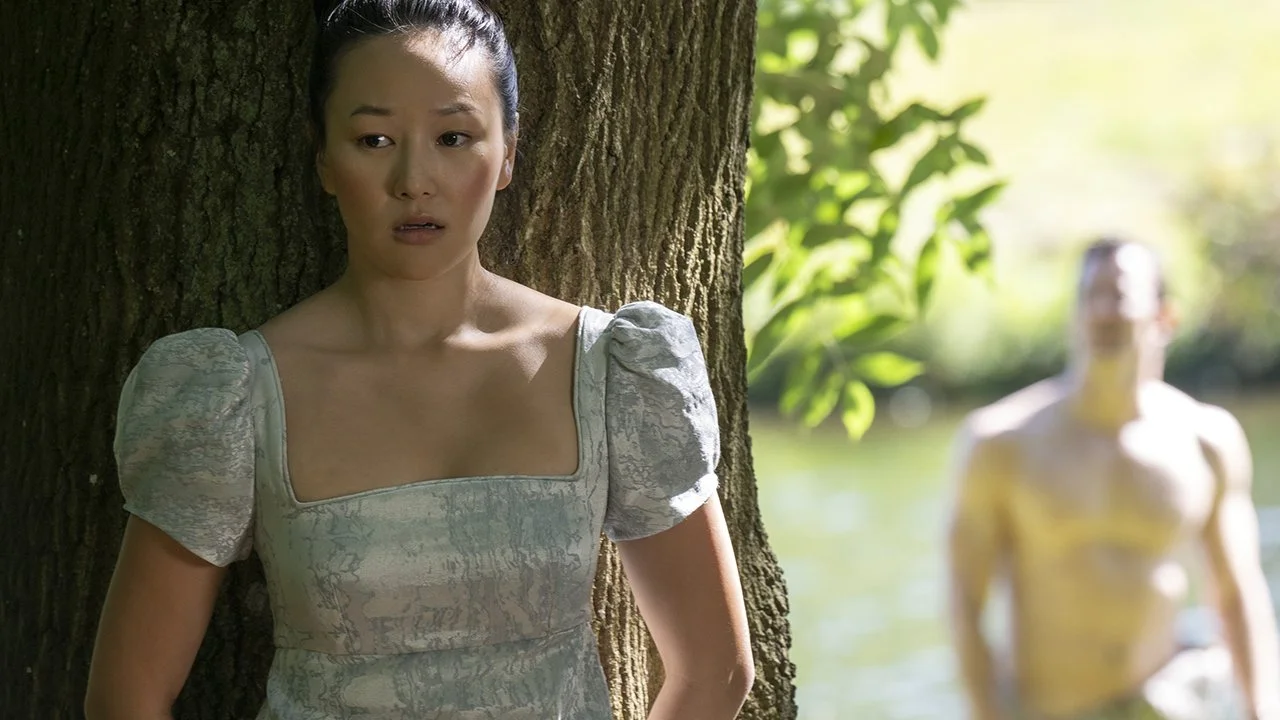
Did that Bridgerton boy really say, you deserve more, be my mistress? I beg your finest Regency-era pardon?
I don’t think I am the only person who briefly considered filing a formal complaint with Netflix at that exact moment. I just sat there on my couch, wondering if I had misheard him. Benedict delivers it so gently, passionately, almost proudly, like he is offering Sophie a thoughtful solution to a complicated problem. Sophie hears it differently. Love is present. Desire is obvious. Yet the offer is not marriage, not public commitment, not recognition. It is a proposal built entirely around how much of their relationship is allowed to be seen.
In one sentence, Bridgerton stops being a fantasy and starts sounding uncomfortably familiar.
Up until then, everything follows the usual romance choreography. The longing glances. The dramatic confessions. The kind of chemistry that makes you briefly forget how inconvenient history was, like the lack of antibiotics and basic human rights. We are watching a classic story unfold. Boy meets girl. Boy falls hard. Boy finally gathers the courage to say how he feels.
And then boy asks girl to be his secret.
The audacity of it deserves is almost impressive.

Sophie understands immediately what he is really offering. In his world, some people get to be loved in daylight. Others are expected to accept affection quietly. A mistress. Benedict can afford visibility the way rich people afford hobbies. Sophie cannot.
Their problem is not passion. It is legitimacy.
I thought I’d dare diagnose this with a sociology theory. Pierre Bourdieu would watch this scene and mutter, finally, something I can work with. His theory of social capital explains it neatly. Class is not just about money. It is about reputation, networks, and the kind of inherited credibility that lets some people walk into a room already approved. Benedict has that without trying. Sophie does not.
In Bourdieu’s terms, certain relationships quietly add to a person’s status and others can threaten it. Love may feel personal, but approval is public. That is exactly what Benedict’s question exposes. He believes he is being generous. She hears an invitation to disappear.
Michel Foucault would recognize another layer immediately and probably roll his eyes. He wrote about how power works best when it becomes invisible, when people start regulating themselves simply because they know they are being watched. Sophie does not need anyone to forbid her happiness. She already understands the boundaries. The rules do not need to be shouted. They only need to be felt.
Between Bourdieu and Foucault, the moment makes perfect sociological sense. Class shapes who is considered worthy of visibility, and visibility itself becomes a form of control.
…Contemporary Parallel
And before anyone dismisses this as an old-fashioned problem, it is worth noticing how familiar the tension still feels.
We live in a dating culture that is allergic to clear labels. People describe months-long relationships as situationships. Exclusivity becomes a negotiation instead of a baseline. Emotional intimacy arrives long before anyone is willing to use the word partner. The question is rarely do we like each other. The question is what version of this are we prepared to acknowledge out loud.
Ambiguity has become the emotional equivalent of sweatpants.
Optionality sits at the center of it all. Dating apps promise endless choice, and endless choice quietly trains people to delay commitment a little longer than they actually want to. Why decide, when you can postpone a decision indefinitely and call it personal growth? Why define something, when definition feels like risk? Even infidelity has softened into vague language. People are not cheating, they are exploring their options, which is a sentence doing Olympic-level gymnastics.
The result is a landscape full of half-relationships that feel real in private and fragile in public.
Class and status still hover underneath, just expressed more politely now. People worry about whether someone fits their professional life, their friend group, their imagined future. They ask practical questions and pretend they are not emotional ones. Will this person make my life easier or more complicated? Will they fit into the story I tell about myself?
Foucault would recognize this immediately. Power does not need formal rules anymore. It lives inside expectations. No one has to forbid visibility. We learn to ration it ourselves.
None of this feels romantic, yet it organizes modern intimacy like an overcaffeinated event planner. Relationships are tested, revised, and negotiated long before they are ever named. Visibility becomes something earned gradually, not granted freely.
Back to Bridgerton
Bridgerton simply takes the awkward part and announces it in full evening wear. In the show, the audience arrives in ballrooms and gossip columns. In our lives, it arrives in group chats, timelines, and the small, persistent awareness that other people are forming opinions whether we like it or not.
That is why Benedict’s question hits so hard. It is not only rude. It is revealing. He offers Sophie affection on terms that protect his status. She hears a request to make herself smaller in order to receive it. The scene works because it turns a sweeping romance into something painfully recognizable.
Sophie’s refusal matters because it rejects that entire game. She does not want a relationship that survives only in corners. She wants to be chosen openly, without conditions, without footnotes. It is a surprisingly contemporary demand from a woman wearing approximately seventeen layers of emotional and physical restraint.
By the end of the episode, the real question is not whether Benedict loves her. It is whether he understands what loving her properly would actually require. Not secret stairwells. Not whispered arrangements. Not the relationship version of off-brand cereal. But the slightly terrifying business of being seen together without apology.
Benedict’s question lingers because it reveals something the show probably did not mean to say out loud. Romance is never just about feeling. It is also about who gets to be seen feeling without consequences. We like to pretend we live in a world beyond that. Then we hesitate before acknowledging someone openly, and remember that visibility has always been a negotiation.
Bridgerton simply stages the negotiation in nicer lighting.